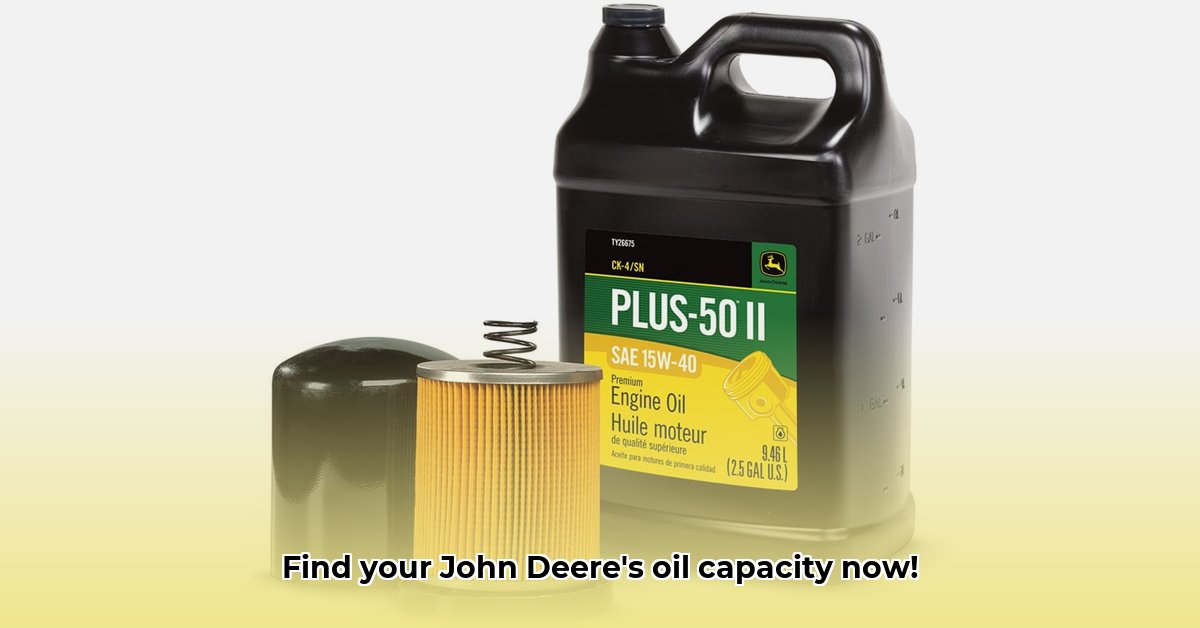
Keeping your John Deere tractor running smoothly requires understanding its specific oil needs. This guide helps you determine the correct oil capacity for your model, ensuring optimal performance and preventing costly engine damage. We'll cover checking your oil level, selecting the appropriate oil type, and troubleshooting potential issues. Whether you're a seasoned professional or a new tractor owner, this guide provides the essential information to keep your tractor in peak condition. For additional lubrication resources, check out this helpful guide: John Deere Lubrication Guide.
Finding Your John Deere Tractor's Oil Capacity
The first step is identifying your tractor's model and engine type. This information is usually found on a plate attached to the tractor or in your owner's manual. Why is this crucial? Because oil capacity varies significantly depending on engine size and type. A smaller tractor naturally requires less oil than a larger, more powerful model.
Your owner's manual is your primary resource. It contains the precise oil capacity for your specific tractor model. Look for sections on engine maintenance or lubrication. Don't have your manual? John Deere's website (1: https://www.deere.com/en/) offers downloadable manuals for many models.
Approximate Oil Capacities (Always Verify with Your Manual)
The table below provides approximate oil capacities. These are general estimates only and may not reflect the exact amount for your particular tractor. Always consult your owner's manual for the precise oil capacity. Failure to do so could lead to engine damage. Isn't it worth the few minutes it takes to check?
| John Deere Model Series | Engine Type | Approximate Oil Capacity (quarts) |
|---|---|---|
| 20 Series | 2-cylinder | 6-8 |
| 40 Series | 4-cylinder | 8-12 |
| 60 Series | 6-cylinder | 12-15 |
| 80 Series | 6-cylinder | 15-18 |
| 5000 Series | Varies | 10-16 (depending on engine type and model) |
| 6000 Series | Varies | 12-20 (depending on engine type and model) |
| 7000 Series | Varies | 15-25 (depending on engine type and model) |
(Note: These are rough estimates. Always consult your owner's manual for precise values.)
Checking and Adding Oil: A Step-by-Step Guide
Before checking your oil, let the engine run for a few minutes to allow the oil to warm up slightly. This ensures a more accurate reading.
- Safety First: Turn off and allow the tractor to cool down before checking the oil. Wear appropriate safety glasses and gloves.
- Locate the Dipstick: The dipstick is usually marked with "MIN" and "MAX" indicators.
- Check the Oil Level: Remove the dipstick, wipe it clean, and reinsert it fully. Remove it again and check the oil level against the markings.
- Add Oil (If Needed): If the oil level is below the minimum mark, add the correct type and amount of oil specified in your owner's manual. Avoid overfilling.
- Proper Disposal: Dispose of used oil responsibly according to local regulations. Recycling is often an option.
Choosing the Right Oil: Protecting Your Investment
Using the incorrect oil can severely damage your tractor's engine. Your owner's manual specifies the recommended oil type and viscosity (e.g., 15W-40, 10W-30). Viscosity refers to the oil's thickness at different temperatures. Choosing the correct viscosity is critical for engine protection and performance across various conditions. Explore environmentally friendly, sustainable oil options; many manufacturers now offer bio-based alternatives.
Troubleshooting Low Oil Pressure
Low oil pressure is a serious problem requiring immediate attention. If your tractor's oil pressure warning light illuminates, shut down the engine immediately. Low oil pressure can lead to catastrophic engine damage. Consult your owner's manual or a qualified mechanic for diagnosis and repair.
Connecting Regular Maintenance to Sustainable Farming
Regular oil maintenance is more than just a chore; it's a key element of sustainable farming practices. Proper lubrication ensures that your tractor runs efficiently, reducing fuel consumption and minimizing its environmental impact. Maintaining the correct oil level directly contributes to the longevity of your equipment, reducing the need for replacements and subsequent resource consumption.